


mCommerce Future: There is a Lot in Store for Mobile Commerce


Listen Full Blog Here
Key Takeaways
- »Mobile commerce is transforming digital shopping through faster, more personalized customer experiences.
- »Mobile payments, digital wallets, and one-click checkout continue to accelerate mCommerce adoption.
- »PWAs, AI chatbots, voice commerce, and social commerce are reshaping the future of mobile commerce.
- »Omnichannel strategies help businesses deliver seamless shopping experiences across every touchpoint.
- »Mobile-first experiences and data-driven personalization are key to increasing customer engagement and conversions.
- »Businesses that invest in mobile commerce technologies are better positioned for long-term digital growth.
With such rapid growth of mCommerce in such a short span of time, there is a lot of discussion regarding the future of mCommerce. In this blog, we will talk about mCommerce trends for future and will weigh what companies need to do in order to sustain competition and grow in the mobile space.
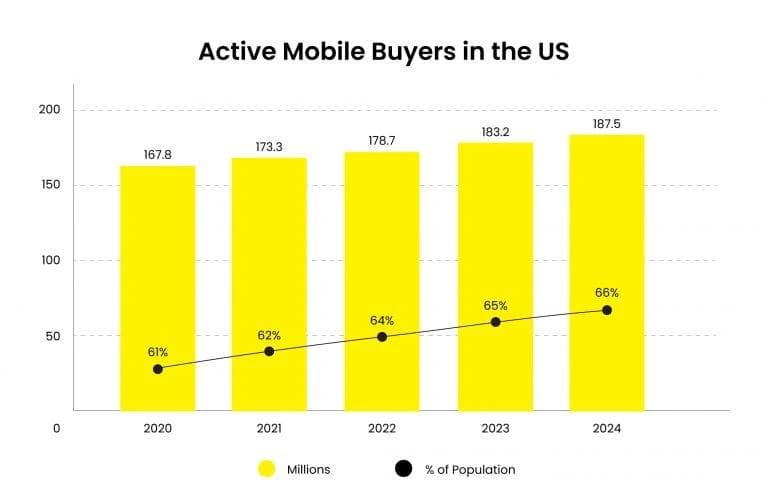
The mobile commerce market is a growing sector and is booming proportionately with the boom in smartphones industry. It is estimated that by the end of the year 2024, the total number of online shoppers using mobile devices for their purchase in the US alone, will be 187 million.
A Throwback At Where It All Started
Mobile commerce goes back to the year 1997 when it was first used to operate and pay at a Coca-Cola Vending machine by customers using SMS services in Helsinki, Finland. It was Merita bank which first launched phone-based banking services through SMS. After the successful execution of this mCommerce experience, many countries and companies decided to follow the trend and revolutionize the way business was being done. Just a year later, in 1998, world’s first digital data download through phone also took place in Finland in the form of ringtones.
Later, two more commercial mCommerce platforms were set up in Philippines and Japan, named Smart Money and i-Mode respectively. By the year 2000, Norwegians could buy parking tickets, Austrians could buy train tickets and the Japanese could even buy flight tickets, all through their mobile phones. Since then, developments in mCommerce have been unstoppable.
Major Milestones in The Journey Of mCommerce
There have been breakthrough developments in mCommerce since the year 1997, but the industry gained momentum only around the year 2013 with big players like Apple and Samsung introducing their own payment platforms, i.e., Apple Pay and Samsung Pay respectively. Let’s have a look here at major milestones achieved in mCommerce:
- Mobile wallets have increased in number and convenience, with Amazon Pay, Google Pay, and other e-payment methods from individual banks etc.
- mCommerce market growth has been exponential, especially in the post pandemic scenario, with mobile commerce accounting for the majority of eCommerce sales
Benefits of mCommerce
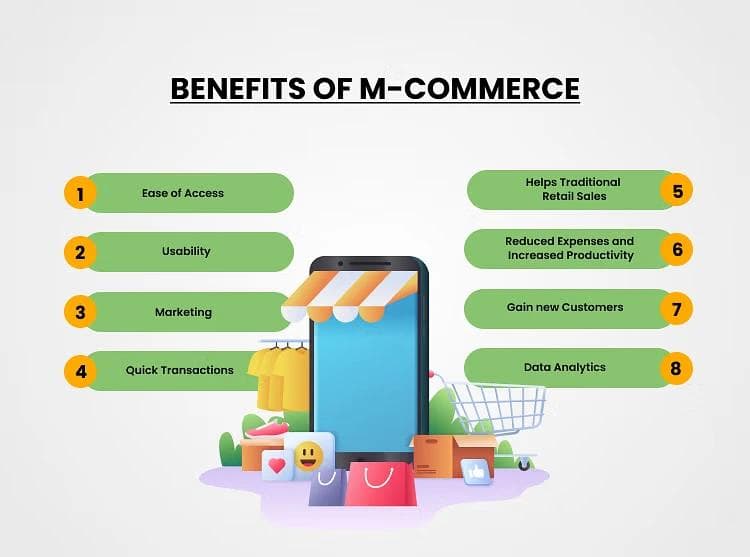
Let’s check out the impact of mCommerce on business:
Ease of Access
Preferred retail stores can be easily accessed through mobile mCommerce apps, eliminating commutes and queues, and saving time and effort.
Usability
Mobile apps are optimized and offer quick, streamlined, and excellent shopping experiences for customers. With just a few clicks they can find what they want and buy.
Marketing
mCommerce offers a direct connection to end users, allowing you to sell directly, send push notifications about latest deals and offers, and even personalized messages to target customers more effectively.
Quick Transactions
Mobile apps are quicker than websites, so mCommerce transactions are faster, making it more attractive to shoppers. Quick browsing, better shopping experience, and anywhere access makes mCommerce a winner all the way.
Helps Traditional Retail Sales
Customers often check products on their mobile devices even when shopping in stores, to compare prices, check reviews and so on. This helps retailers boost sales in stores, and is one of the biggest benefits of mobile commerce.
Reduced Expenses and Increased Productivity
Mobile apps help to connect directly and quickly to customers, saving you big expenses on marketing campaigns; with social media integration, you can reduce expenses further, making customers your brand advocates. Mobile app development itself is cheaper than eCommerce development.
Gain new Customers
Mobile-optimized sites can boost your chances of attracting new customers as people search online using mobile devices for products and services. Retargeting helps retailers to target customers who visited their sites and left without purchasing as well.
Data Analytics
Mobile apps deliver insightful analytics that enable them to target consumers effectively. Demographic data, purchase history, and contact details can be collected to predict future behavior and deliver personalized marketing messages and offers.
Mobile Commerce Trends
mCommerce technologies have broken the barriers for a prospective buyer to be present in front of their systems. This being the biggest merit of mCommerce, users can now buy anything, anywhere and anytime. But there is much more to mCommerce than this. Advancements in mCommerce are disrupting the traditional retail systems and are putting a lot of pressure on the retailers to adapt to this quick change or shut down!
The need of shoppers for a hassle-free checkout process has created a fair opportunity for the mobile wallets to flourish.
Businesses need to transform their operating models, strategies, processes, and infrastructure into an intelligent system which could provide more personalized and relevant experiences to customers and enhance loyalty. A recent study by Bain and Company, done along with Earl Sasser of Harvard Business School, shows that a mere 5% increase in customer retention can increase the profitability by as high as 95%.
The following is likely to define the Future of mCommerce:
One-Click Ordering
Till 2017, “1-click” ordering was patented to its pioneer, Amazon, but is now available for all to use, and it’s a trend that will define mCommerce in 2023. A customer has to input their details just once on the website, and can ‘ask’ the site to remember this data for future purchases, enabling quicker, smoother transactions, and richer customer experiences, leading to higher conversions.
Voice Search-and-Shop

Various studies conducted reveal that a huge majority of shoppers would prefer to use a voice assistant while searching during online shopping – so retailers must optimize their websites and apps for this feature. AI and voice recognition enable voice searching and shopping, making online transactions quick.
Mobile Apps and PWAs
Nearly every business worth its salt now has an app to be able to connect more directly with customers – it’s more convenient than using browsers to go to your website, even if it’s responsive. Progressive web apps or PWAs are also hugely popular as these are websites which offer the look, feel, and experience of native apps, but don’t need to be installed on user devices, saving them space. See how PWAs can benefit your business.
Chatbots
Computer programs that simulate human conversations and assist customers with their shopping are becoming more popular. They are capable of answering frequently asked queries; if the query is too complicated, it is redirected to an actual employee who can answer it. Chatbots can be online 24/7, responding to customers immediately – hence their popularity.
Mobile Payments
This is definitely going to be one of the defining features of the future of mCommerce. Including mobile wallets allow seamless, contactless payments and offer immense convenience; make sure to include them in your apps.
VR/AR

Big brands like Amazon use VR and AR to try out products before buying them, minimizing risk of the product not matching their expectations. Ikea provides furniture recommendations via this technology. When customers point the phone cam at specific spaces, the area is measured to determine ideal items of furniture.
Social Commerce
This allows customers to buy goods and services directly from social networks like Instagram without going to a website or mobile app. On an average, users spend 147 minutes on social media, around the world. This is one trend you simply cannot afford to ignore.
Omnichannel retail strategy
Omnichannel refers to using several channels, like your store, social media pages, mobile app, website, etc. to sell your goods and services, and is also one of the top Magento development trends for 2023.
It’s important to have a retail strategy that integrates all these platforms and channels, so that you can provide several options to your customer, and a seamless shopping experience as well. Many users may find your product on one device, and use another to purchase it.
Geolocation
Knowing where your customer is based helps retailers to market their business there – it allows searchers to find your business in that area.
Accessibility
Accessibility allows disabled users to shop via mobile; certainly, something retailers should be mindful of when they get their apps and websites made
Preparing for the Future of Mobile Commerce
Mobile commerce is no longer an emerging trend. It has become a fundamental part of how consumers discover, engage with, and purchase products online. As technologies such as AI, mobile payments, voice commerce, and social commerce continue to evolve, businesses must prioritize seamless, mobile-first experiences to remain competitive. Investing in scalable mCommerce strategies today will help brands improve customer engagement, increase conversions, and adapt to the future of digital commerce.
Future-proof your mobile commerce strategy with Codilar Technologies. Talk to our specialists today

FAQs
Mobile commerce, or mCommerce, refers to buying and selling products or services through mobile devices such as smartphones and tablets. It includes mobile shopping, mobile banking, digital wallets, and in-app purchases.
Mobile commerce allows businesses to reach customers wherever they are, deliver personalized shopping experiences, simplify the checkout process, and increase conversions through mobile-first engagement.
Key mobile commerce trends include AI-powered personalization, mobile wallets, one-click checkout, Progressive Web Apps (PWAs), voice commerce, social commerce, augmented reality (AR), and omnichannel shopping experiences.
PWAs combine the speed and functionality of native mobile apps with the accessibility of websites. They load quickly, work across devices, improve user experience, and help businesses increase mobile conversions.
Businesses can strengthen their mobile commerce strategy by optimizing for mobile-first experiences, adopting secure digital payment solutions, leveraging AI-driven personalization, implementing omnichannel commerce, and continuously improving website performance and usability.

eRetail Growth
in Mind?
Get tailored technology solutions to scale your retail business online
Request A Quote


Subscribe to
Stay in Know
Stay ahead with insights, trends, and brand success stories from the world of Digital Commerce.