


Augmented Reality Revolutionizing the Future of Computer Graphics

Listen Full Blog Here
Key Takeaways
- »Augmented Reality is transforming industries through immersive, real-time digital experiences.
- »AR combines the physical and virtual worlds to improve visualization, interaction, and decision-making.
- »Healthcare, manufacturing, education, retail, and navigation are among the leading applications of Augmented Reality.
- »Advances in AR technology continue to expand its role in business innovation and digital transformation.
- »Understanding the differences between AR and VR helps businesses choose the right immersive technology.
- »Augmented Reality is shaping the future of computer graphics and customer experiences.
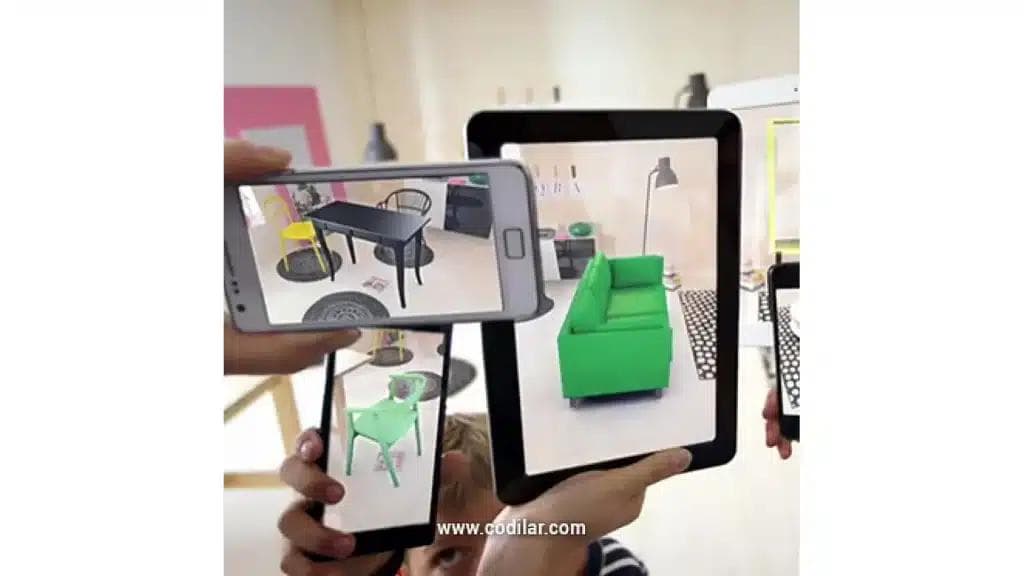
A live view of a physical, real-world environment, augmented by computer-generated sensory input, such as sound actions or graphics is termed as augmented reality (AR). Augmented reality must have the following three characteristics, i.e.
- It combines real and virtual world
- It is interactive in real time
- It is registered in 3D
The scope of AR includes various ‘enabling technologies’ which enable the Augmented Reality technology to function the way it does. The enabling technologies mentioned are described below:
Enabling Technologies in Augmented Reality
Display Technologies
This includes see-through displays which are not supported by a physical screen and use holographic optical elements for display; projection based displays where graphic information is superimposed directly on real objects or surfaces; handheld displays which could be both see through or projection based; Spatial displays and Aural and Haptic displays.
Tracking Techniques
The tracking technology used could be sensor-based, vision-based or a hybrid of the two.
The User Interface and Interaction Technologies
The user interface could be supporting tangible AR where the digital information is manipulated using physical objects. Apart from this, gesture recognition can be used as a UI or the most effective method, which is the hybrid UI and includes a synchronized combination of gestures, speech, sound, vision and haptics.
Brief History of AR
It all started in the year 1968 when the first head-mounted display system was designed and developed by Ivan Sutherland. He is considered as the ‘father of computer graphics’ and he held his stance by creating the first ever virtual reality system named ‘The sword of Damocles’. The next big milestone in the history of augmented reality is the creation of an artificial reality laboratory called ‘The Videoplace by Myron Kreuger. The idea behind it was to create an artificial reality that surrounded the users and responded to the actions and movements, putting them in an interactive environment, without requiring any objects like gloves or goggles etc. After all the advancements in the field, the term ‘Augmented Reality’ was coined in the year 1990 by Tom Caudell. One of the earliest AR systems was built for Air Force, to allow the military to control the guided machinery to perform activities, from a remote operating base. Following many other advancements and milestones, augmented reality has finally taken the shape of what it is today. The investments in the field of virtual reality and augmented reality have reached $1.1 billion (as per Huffingtonpost.com data) by the year 2016.
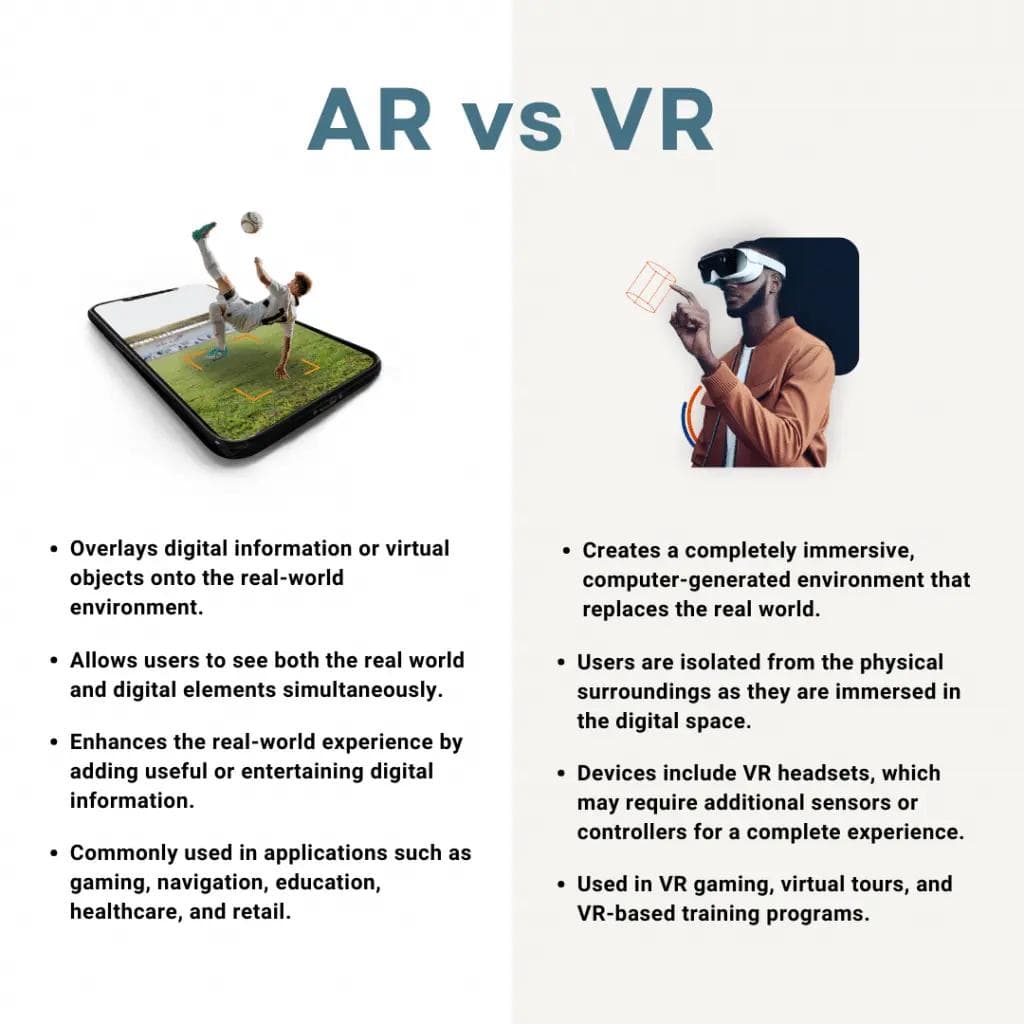
What’s the Difference Between AR and VR?
Application of AR
Today, AR has a multitude of applications in different fields of business and industries.
1. Medical Applications
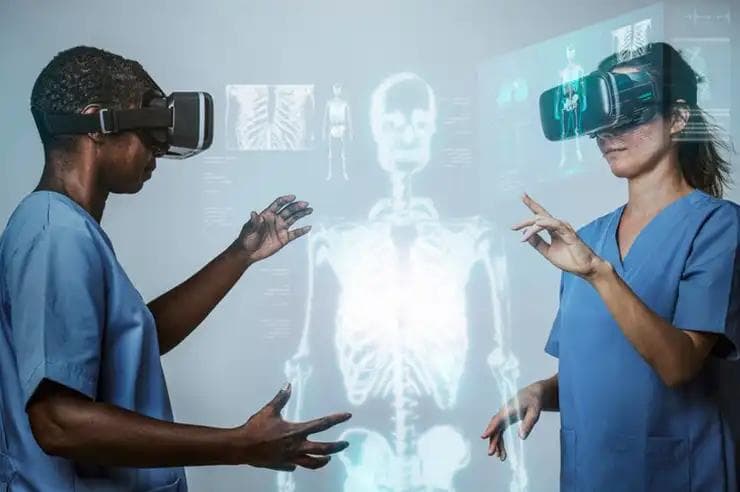
AR can be used as a virtualization and training method for aiding surgeries with increased success rate. Virtually displayed procedures in a live environment avoid the need to look at manuals in middle of a surgery when all the information is in front of the surgeons in form of virtual instructions.
2. Manufacturing and Repair Applications
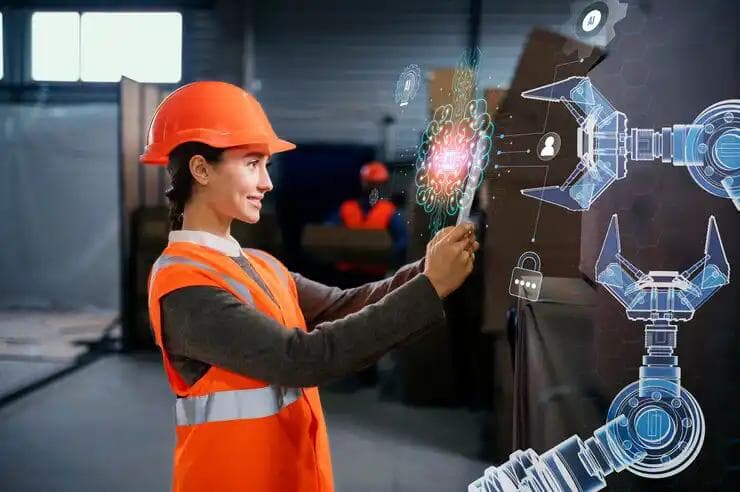
Instructions presented in the form of 3D drawings, which can be superimposed on the actual hardware and equipment, are an efficient solution for the tasks to be done. 3D images displayed on 2D manuals or papers are cumbersome to understand and follow otherwise.
3. Advertising, Entertainment and Gaming Applications
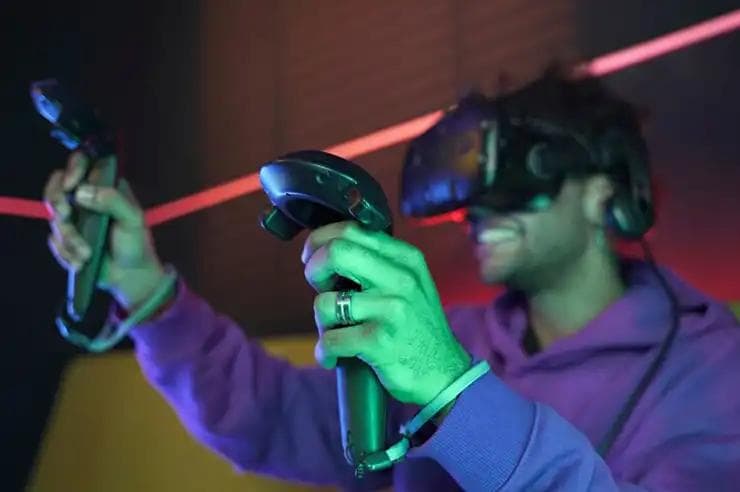
AR is an enticing option if meant to reach a larger audience, such as in the case of a sports broadcast or advertising. Apart from this, gaming also has a huge application of AR to allow gamers to experience virtual gameplay in a real environment for a better and exciting impact.
4. Military Applications
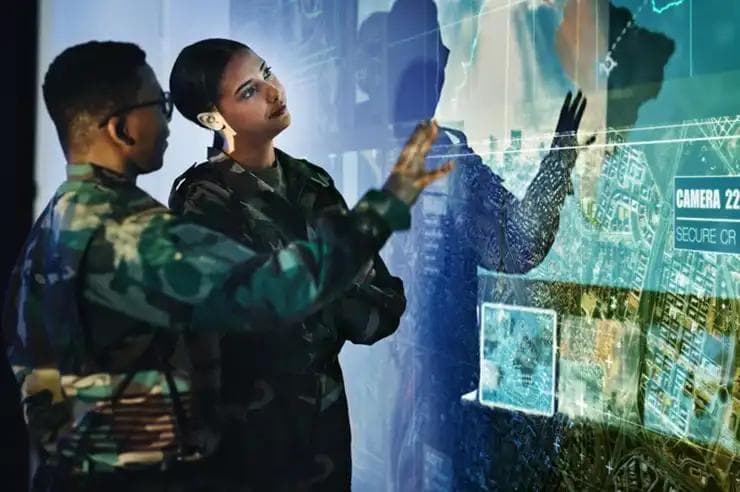
The Heads Up Display (HUD) is an example of AR application in military aircraft where the pilots can have all the information like altitudes, air speed, horizon lines etc. right in front of their view. Another application is Head mounted display used by ground troops and talked about above in this article.
5. Education and Training Applications
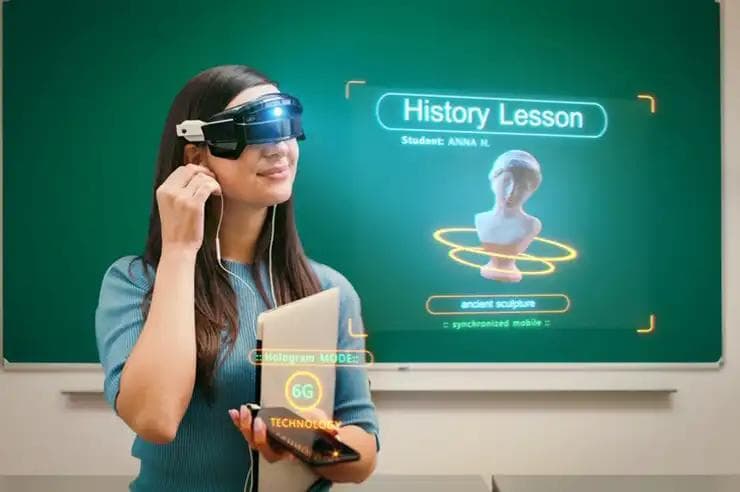
The major elements or modes of education, i.e., texts, images, audio, and videos can be combined and superimposed into the students’ or trainees’ real time view for better impact and understanding.
6. Navigation

Wiktitude Drive’ brings AR-enabled GPS systems in the 21st century for Android operating systems. With the phone camera in sync with the GPS, the users can see the live view of selected routes and what comes in front of the vehicle.
Augmented reality is the future of a seamless efficient workplace. AR aids in improving collaboration of systems and enables easy and hands-free access to data. It completely redefines certain experiences and functions of workplace such as training, design, and field service. AR is being developed to power future workplaces as it is the undisputed alternative when it comes to dynamically change the person’s field of view while they are performing a task, and it is claimed that there is a 30% efficiency increase in time while performing a task, when information is in the employee’s field of view.
The future seems promising when it comes to widening the avenues for AR applications. AR sees major utility and application in the field of tourism and navigation. Although investments and R&D levels are increasing for developing augmented reality systems, there are certain limitations to this field in terms of portability and outdoor use, tracking and calibration in unprepared environments, latency, less data density to handle huge data, adaptation and long-term use and social acceptability on a mass level. AR has come a long way since 1968 but there is a lot more that can be worked on to make AR the ultimate breakthrough!
The Future of Augmented Reality
Augmented Reality is rapidly evolving from an emerging technology into a practical business tool across industries. From enhancing workforce productivity and training to creating immersive customer experiences, AR is redefining how people interact with digital content in the real world. As businesses continue to embrace digital transformation, Augmented Reality will play an increasingly important role in driving innovation, improving engagement, and unlocking new opportunities across retail, healthcare, manufacturing, and beyond.
Explore next-generation digital experiences with Codilar Technologies. Connect with our specialists today

FAQs
Augmented Reality (AR) is a technology that overlays digital content, such as images, animations, or 3D objects, onto the real-world environment in real time, enhancing how users interact with their surroundings.
Augmented Reality enhances the real world by adding digital elements, while Virtual Reality (VR) creates a completely immersive digital environment that replaces the user's physical surroundings.
Augmented Reality is widely used in healthcare, manufacturing, education, retail, navigation, gaming, and field services to improve visualization, training, customer engagement, and operational efficiency.
Businesses use Augmented Reality to improve customer experiences, streamline employee training, enhance product visualization, support remote assistance, and increase operational efficiency through interactive digital experiences.
The future of Augmented Reality lies in broader adoption across industries, powered by advances in AI, wearable devices, spatial computing, and digital commerce. As the technology matures, AR is expected to become a core component of next-generation customer experiences and business operations.

eRetail Growth
in Mind?
Get tailored technology solutions to scale your retail business online
Request A Quote


Subscribe to
Stay in Know
Stay ahead with insights, trends, and brand success stories from the world of Digital Commerce.